Little Cosmos

a venture into space

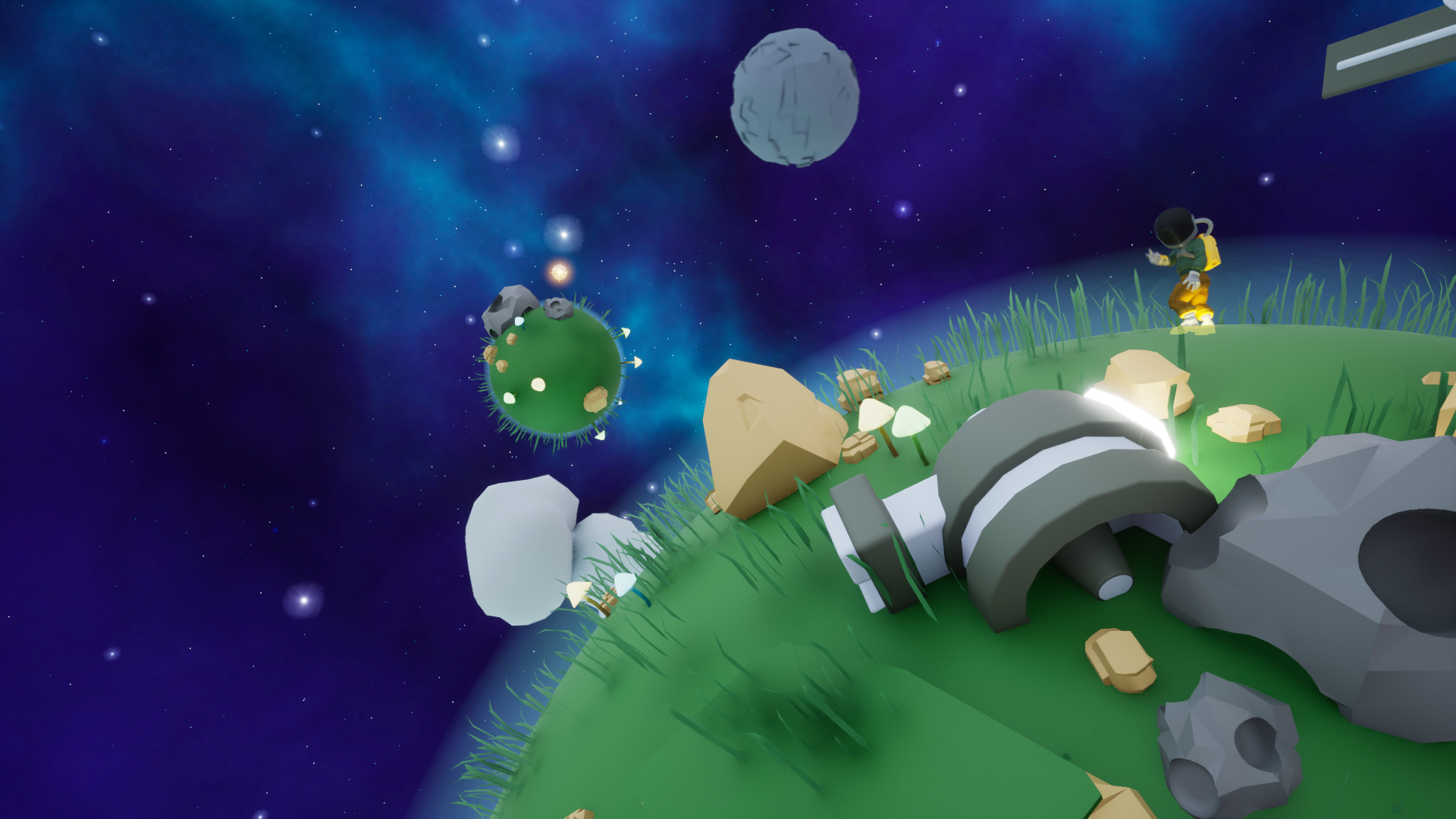
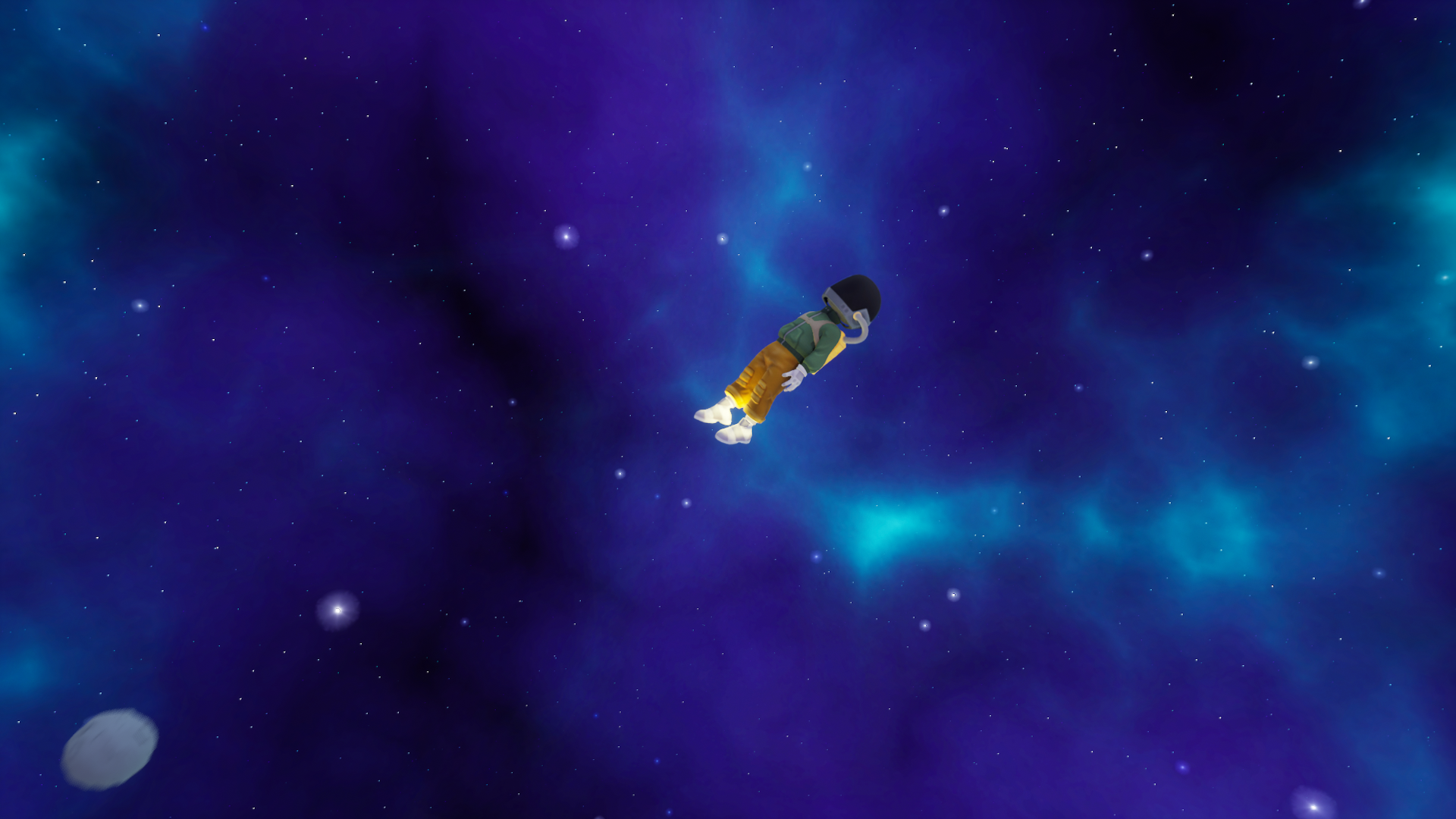
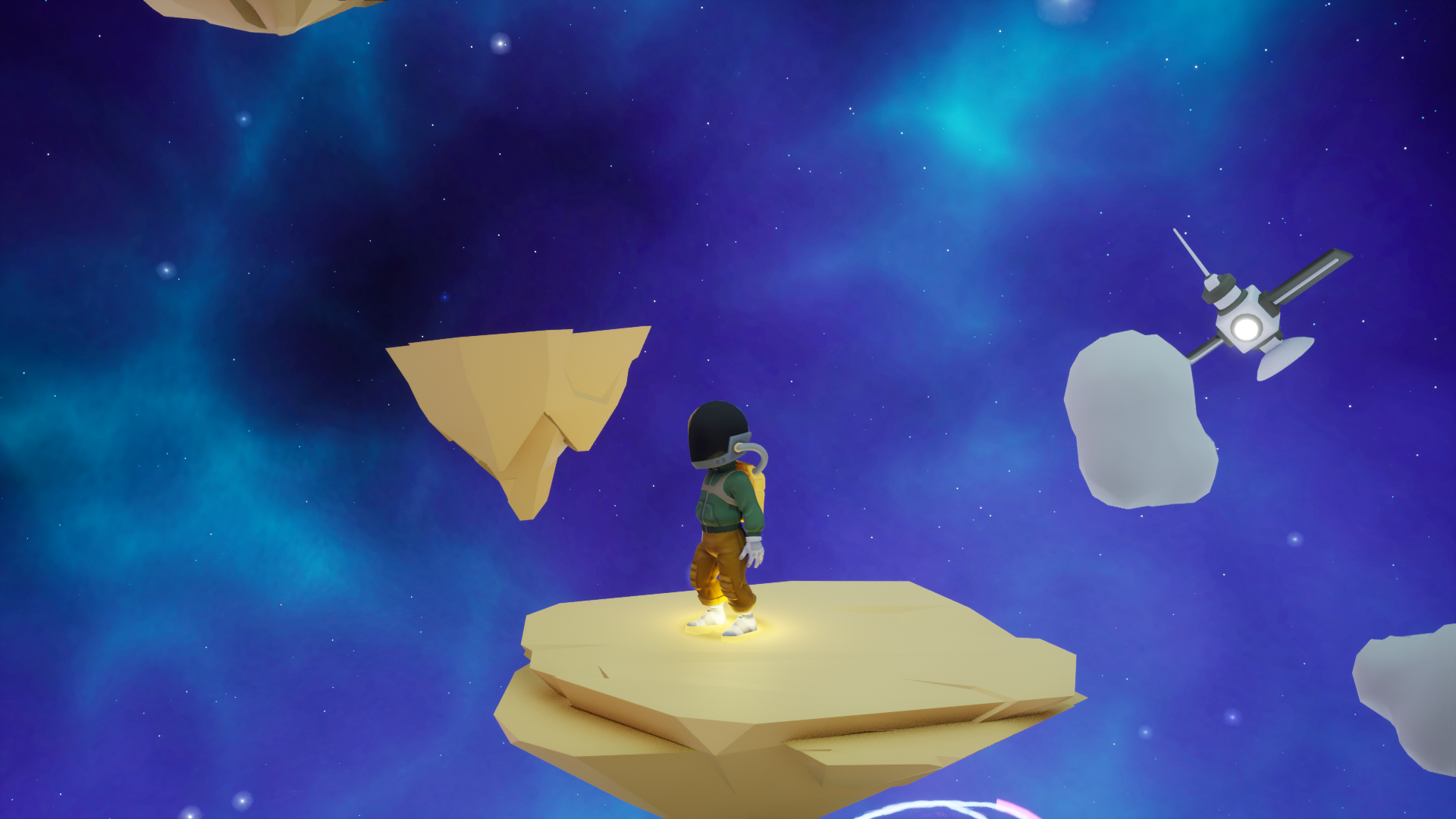
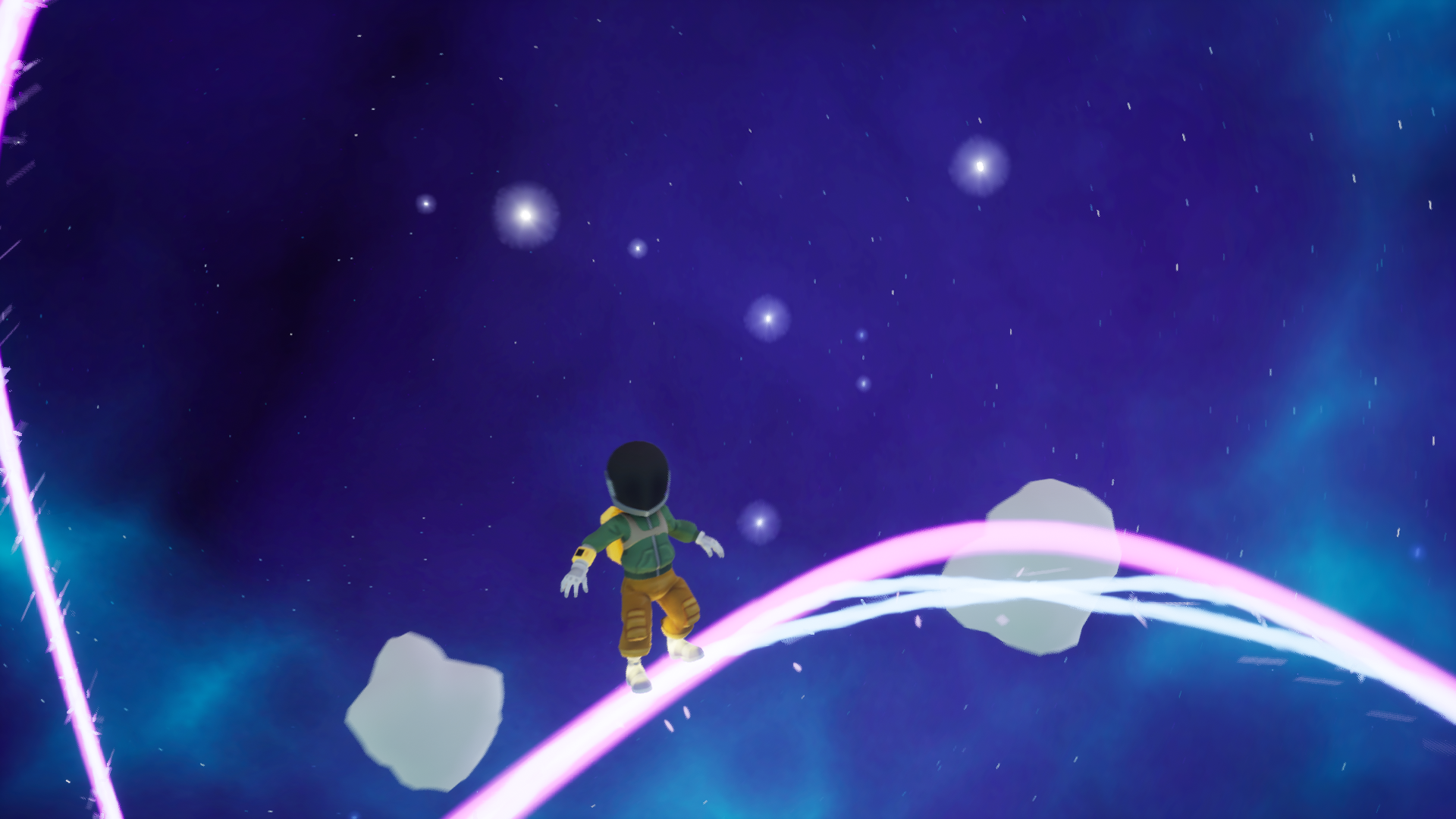
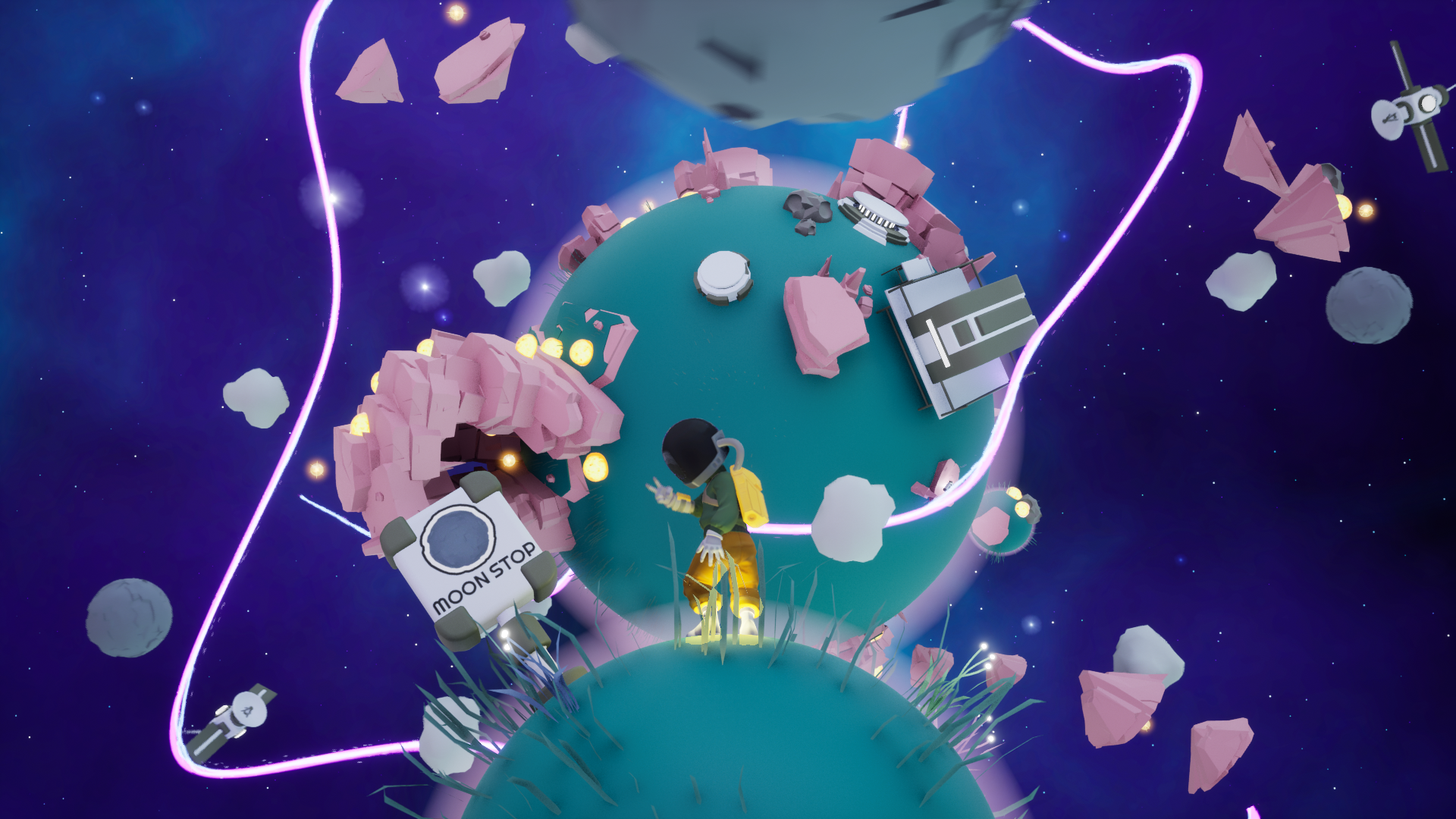
Little Cosmos is a classic 3D-platformer with a gravity twist. In this single-player adventure you explore different planets with unique environments and challenges. Get swept away by a moon, glide along space rails and jump from planet to planet by collecting solar orbs.

Gameplay

Prototyping

UI Design

Level Design
Background

This game was created during a 6-week school project by a team of 9 students, consisting of designers, artists and programmers. The game was shaped under the prompt "natural phenomena". My primary focus during this project was gameplay design but I also worked across disciplines and contributed in other areas.

Tools

Unreal Engine 5

Figma

Visual Studio

Perforce

Info

Team of 9

6 Weeks

School Project

Gameplay

I played a key role in shaping the gameplay experience of Little Cosmos and developed a vision for what the game should feel like and how it should play. I spent the initial part of the project conceptualizing and exploring ideas. I was responsible for refining the core game concept, creating a gameplay loop and ensuring a cohesive gameplay experience.

Core Concept

The basic concept for the game was decided on as a team through a number of brainstorming sessions. The focus would be on gravity, the game would be set in space and played as a character in third person. The game took shape early on in the development process by testing out systems and prototypes to form an idea of what the game could potentially become.

Gravity

As the main feature each planet has its own gravitational pull and the player is drawn towards the closest planetary body.

Platformer

A classic platformer with a gravity twist increases the sense of the gravitational pull and gives it a direct impact on the gameplay.

Exploration

The player is free to explore and progress at their own pace, and is never really in the wrong place at any given time.

Gameplay Loop

To create a gameplay loop I needed to connect the core idea to an objective and game progression. I took the established pieces of the game and brought it together into something playable.

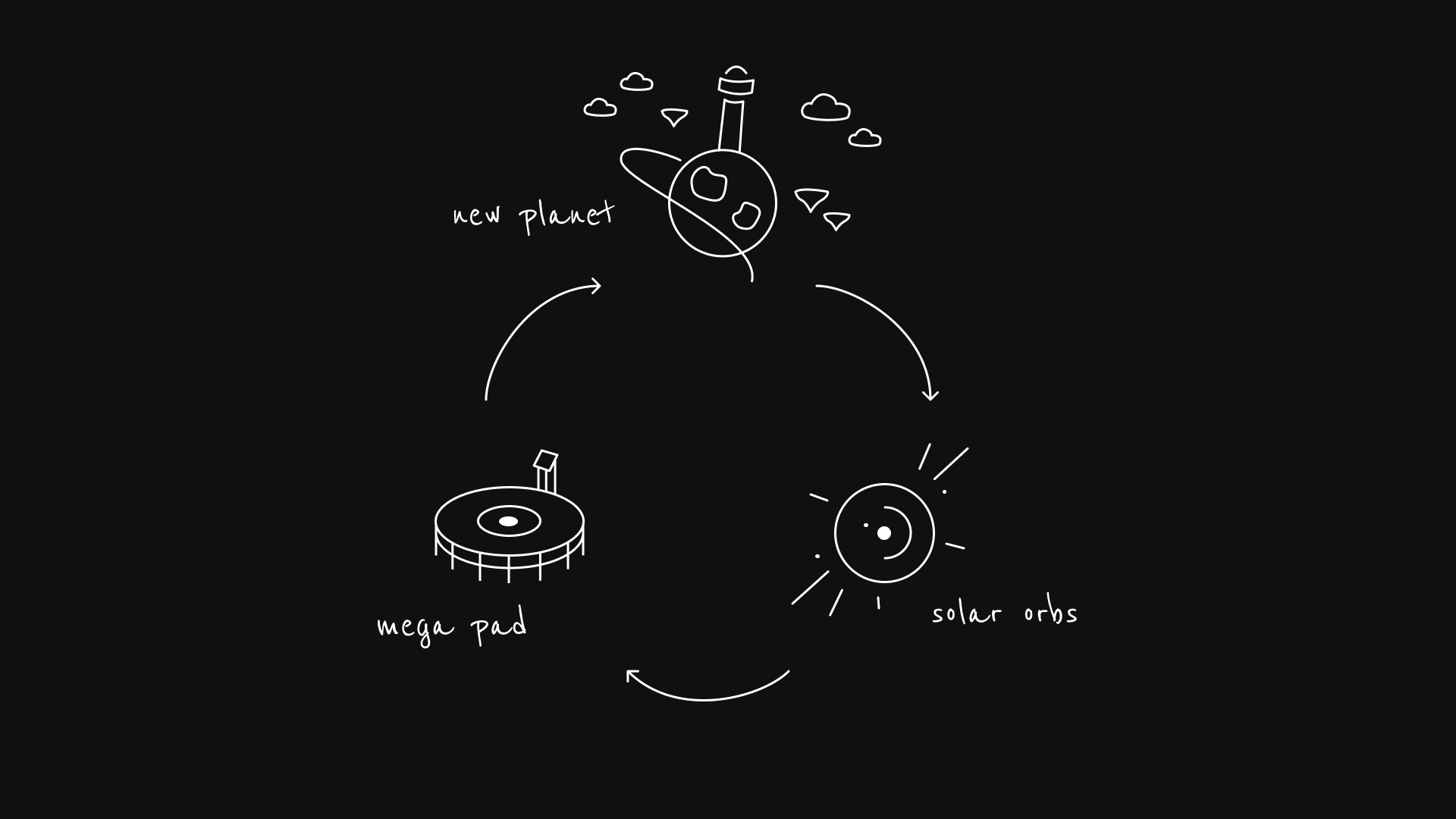
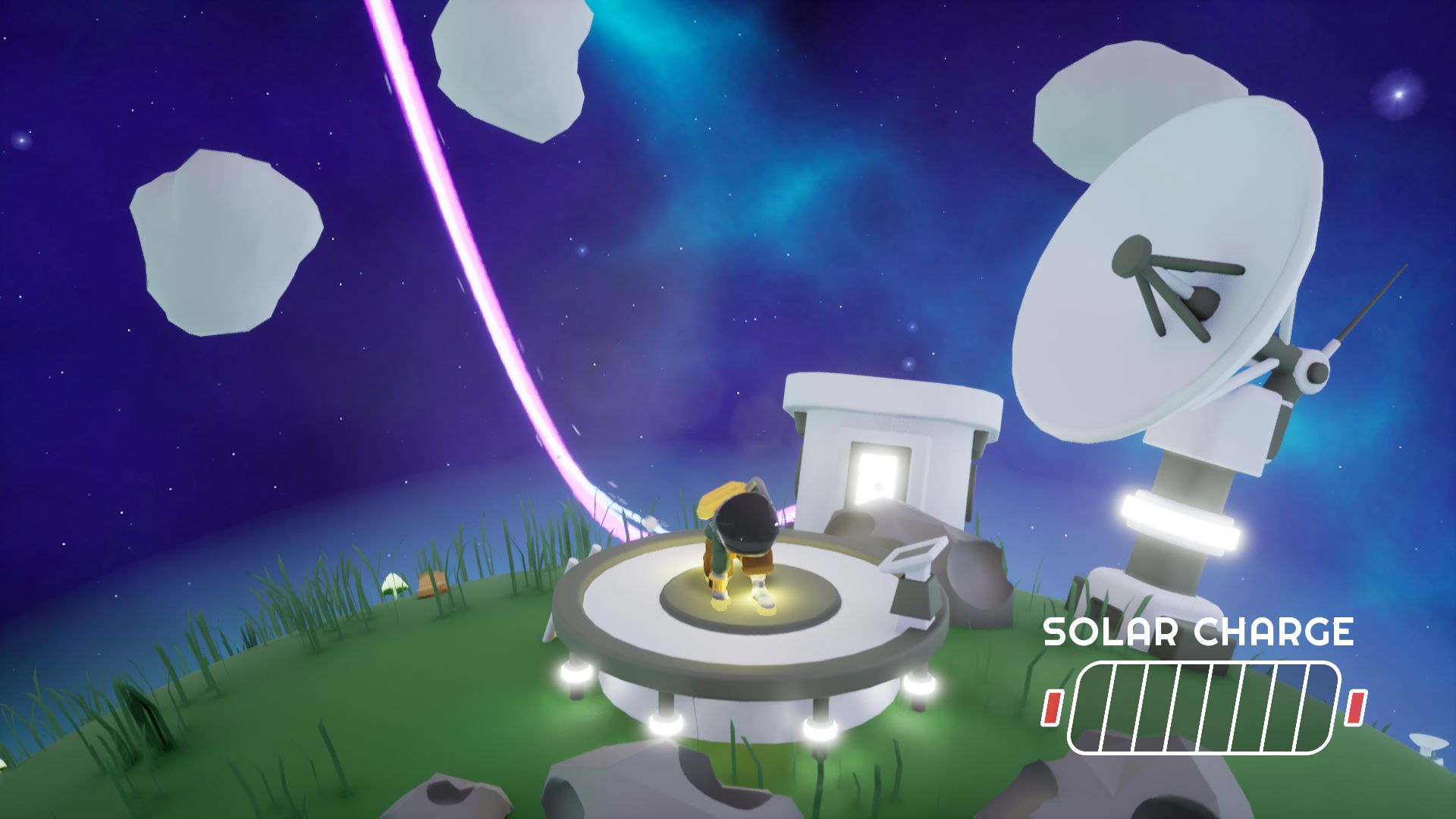
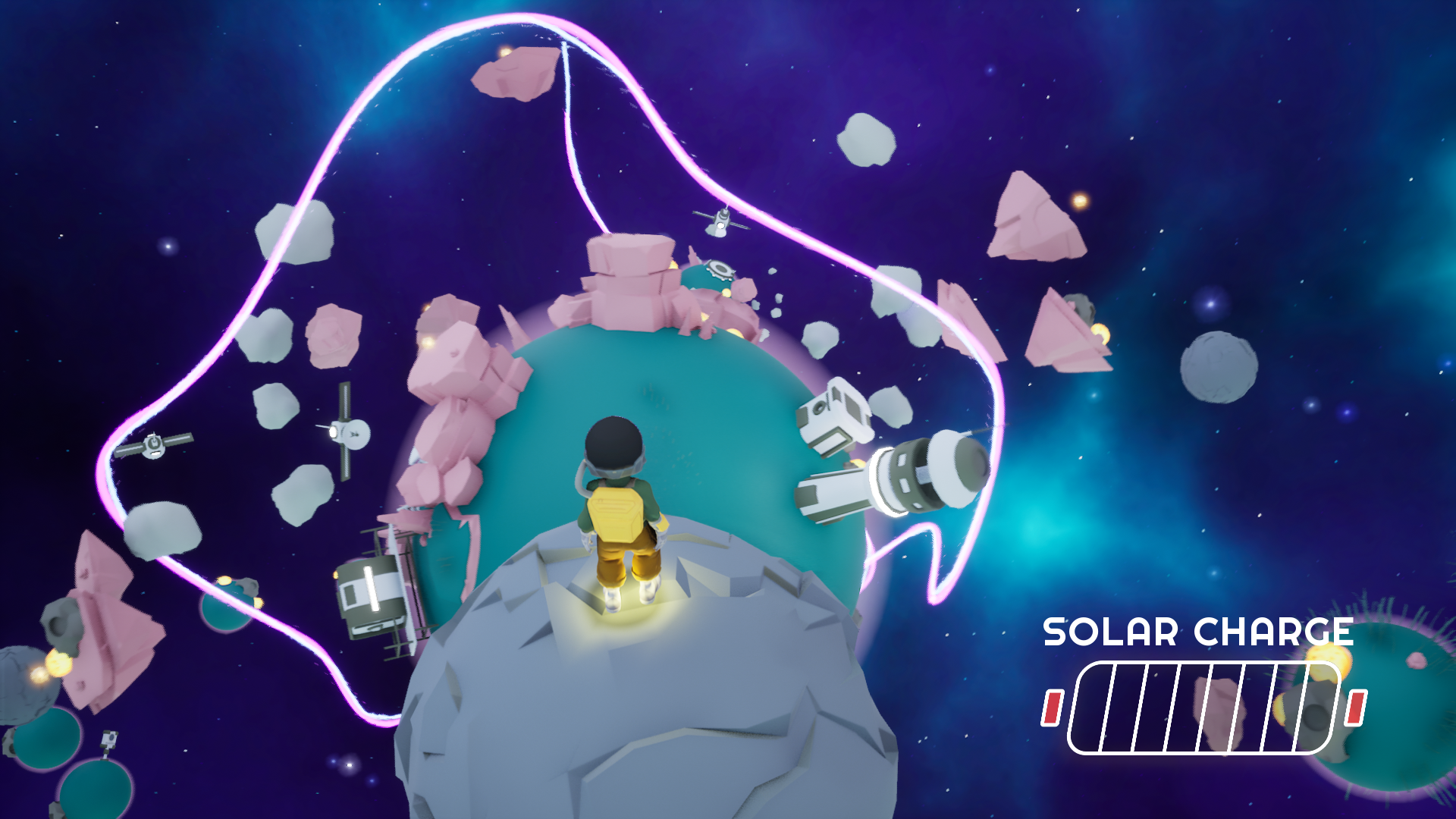
Starting on a planet, the player engages in platforming and exploration. The player needs to collect a certain amount of pickups, orbs of solar energy, to charge up a battery. Once fully charged the player can use a mega jump pad to launch themselves into space. The player is taken to the next planet through a cinematic launch with a superhero landing. This discharges the battery and the player is free to roam and collect pickups once again. The pickup system in combination with the mega jump pads establishes a sense of accomplishment and efficiently conveys game progression.

Movement and Camera

The character moves in relation to the camera position and there was an issue with jittery camera movement as the player moved around in the environment. To decrease this I added camera smoothing so that the camera is always slightly chasing the player. Camera collision was kept to a minimum as to not interfere with player navigation. I adjusted the player movement such as jump height and movement speed and I opted for an inreased gravity force in order to keep movement and jumps suitable for platforming.

Prototyping

As part of gameplay design I was responsible for generating ideas, prototyping various gameplay elements and requesting assets in order to bring the game to life. These prototypes were later refined along with programmers and artists into final level assets.

Gameplay elements

Since space is a pretty vast environment I wanted to make it more interesting to move around in by mixing classic platforming components with other ideas, drawing inspiration from things found in space and nature, or just imagination.

Geysers

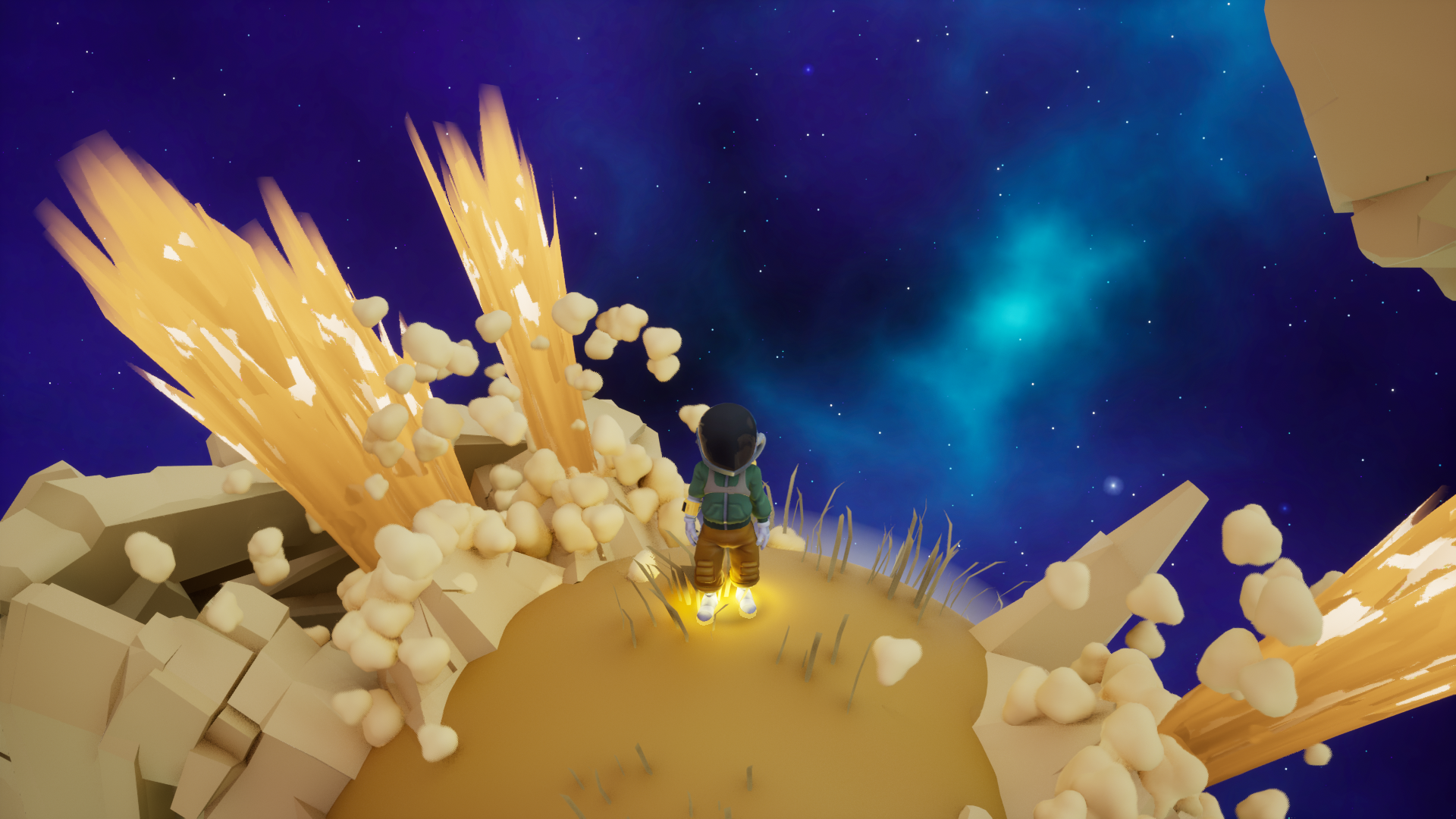
If the player stands on or walks onto geysers while they are active, they will be launched straight up into the air.

Portals

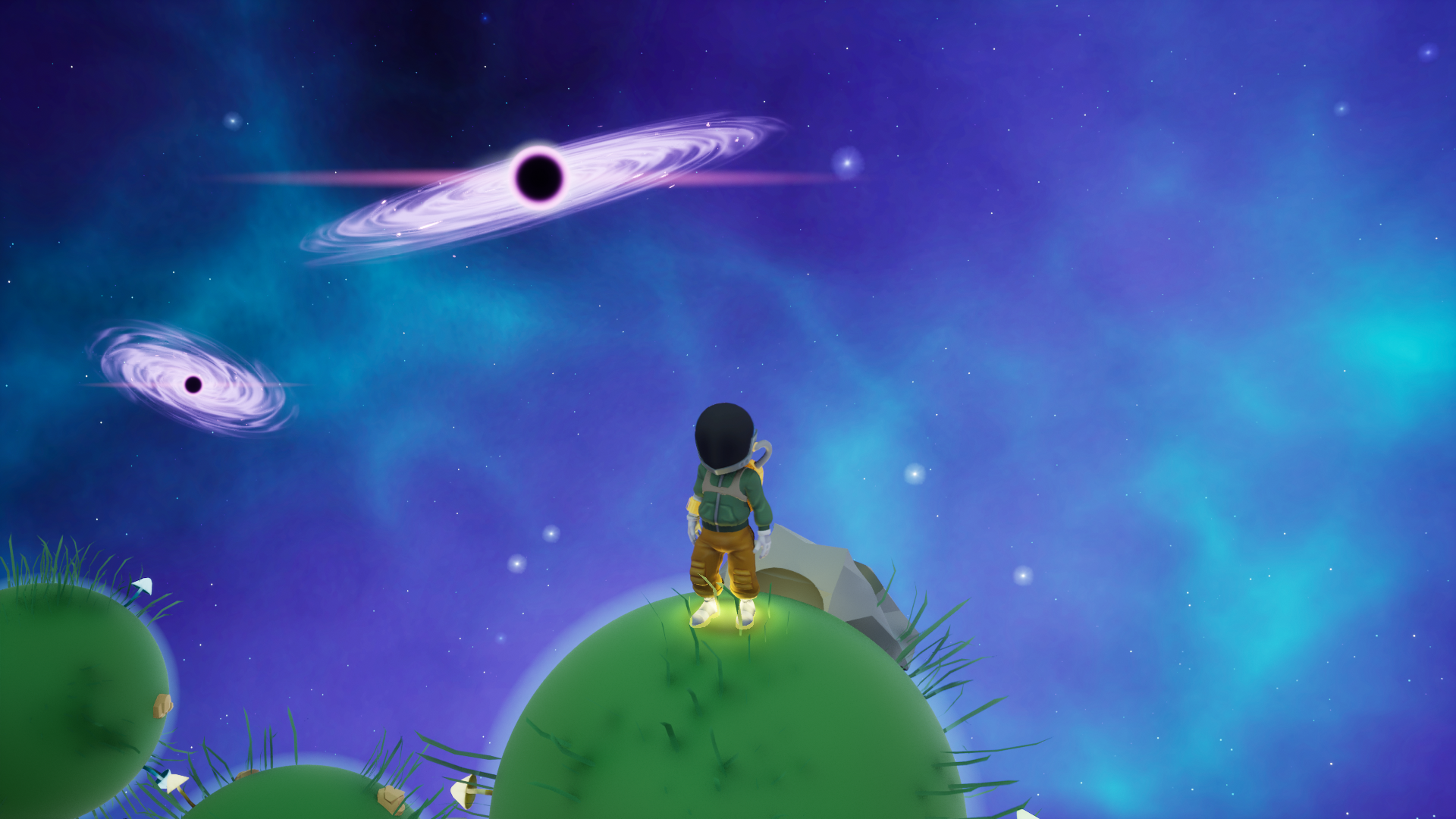
The portals, which were inspired by wormholes, teleport the player to another portal on the planet.

Space blobs

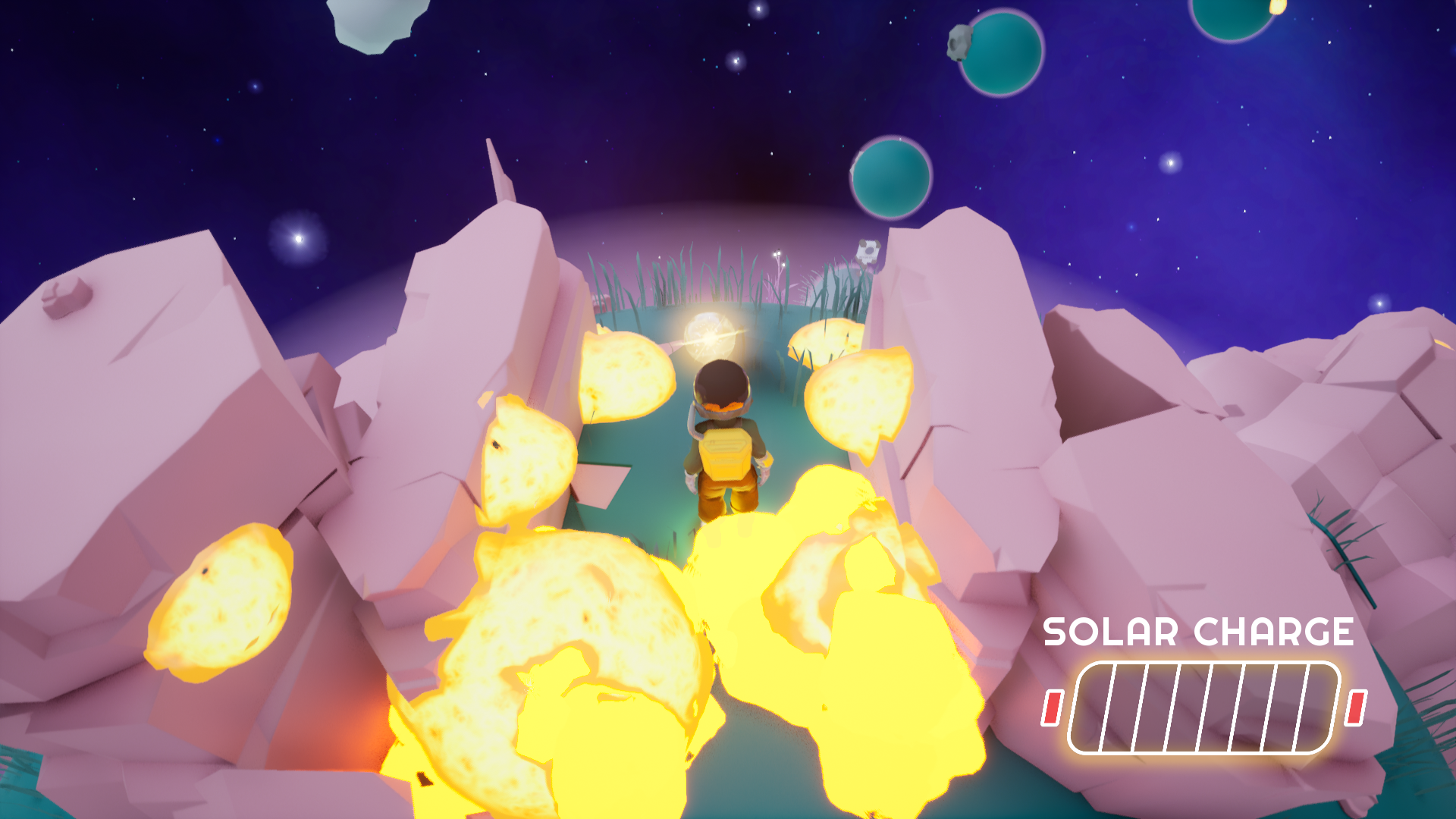
These friendly blobs get agitated when the player gets too close to them and explodes with a force.

Jump pad

As a classic platforming element jump pads are specifically designed to jump on, launching the player high up in the air.

Platforms

Another platforming essential, platforms come in two variations and either sink or rise as the player lands on them.

Rails

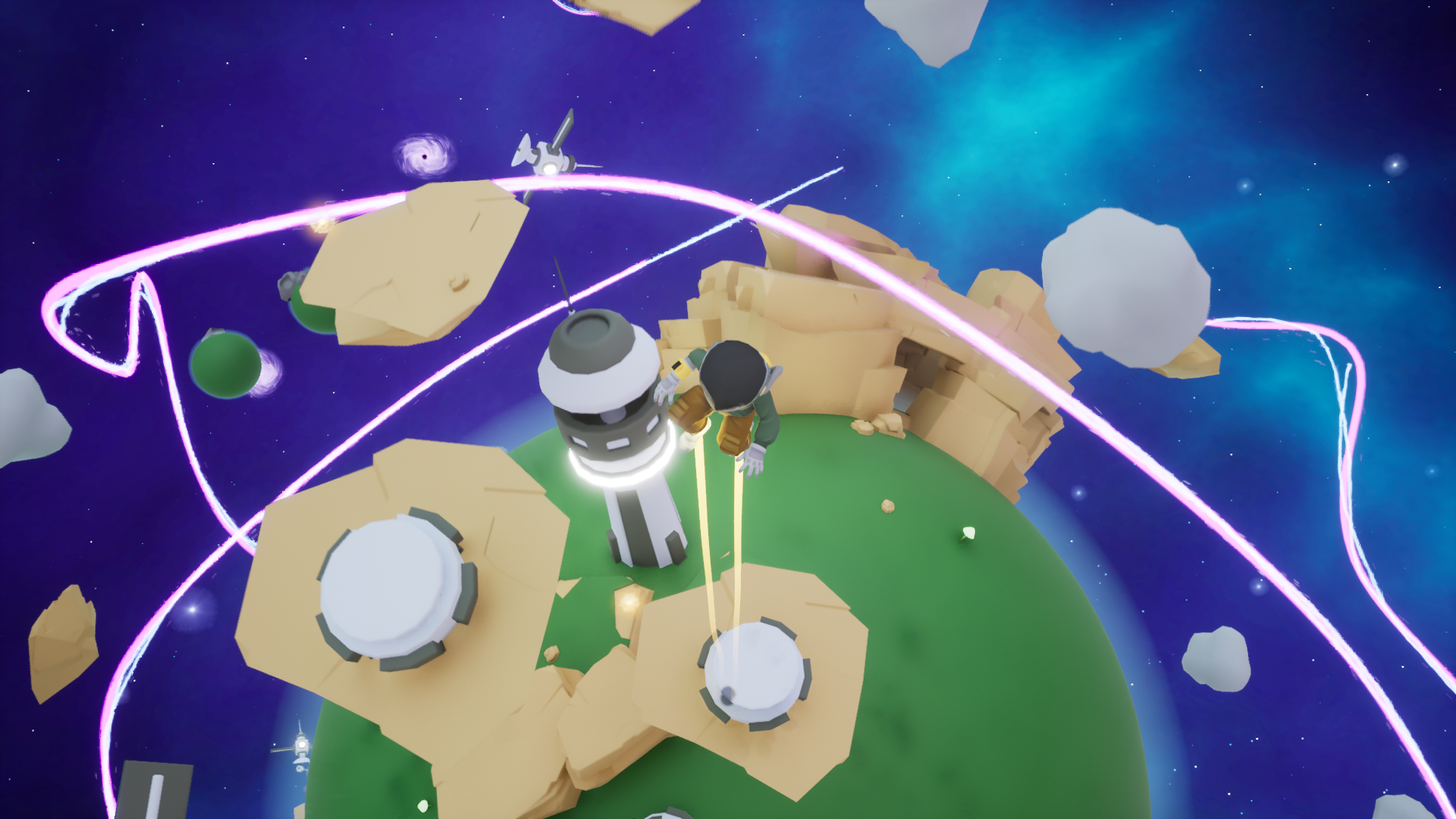
I think of them as planet rings that the player can jump onto to glide around. The rails were developed by the programmers.

Level Design

In the second half of the project I moved over to level design. I used the original ideas from the first iteration of the level and built a second and final iteration. This allowed me to playtest and tweak the level as I was building it.

Level iteration

I implemented and tested any new gameplay elements and game additions, and made sure that platforming was still feasible with any current movement adjustments. I adjusted the flow and pacing of the level, ensuring that new settings, mechanics, and level progression felt satisfying as gameplay elements were introduced on each planet.

Did you know that..

.. building levels on round planets is pretty difficult?

This problem hit pretty early on in the project as there was no real sense of up — everything was relative to the planets. The programmers were able to create a system for us to use that would rotate the assets toward the center of gravity. It helped tremendously while building, but I would still get a bit nauseous while moving and rotating the camera around.

UI Design

I designed the UI for the game by defining a simple playful style that would be easy to implement over the entire project. I created assets and implemented them in widgets and the functionality was integrated by the programmers.

Mockups

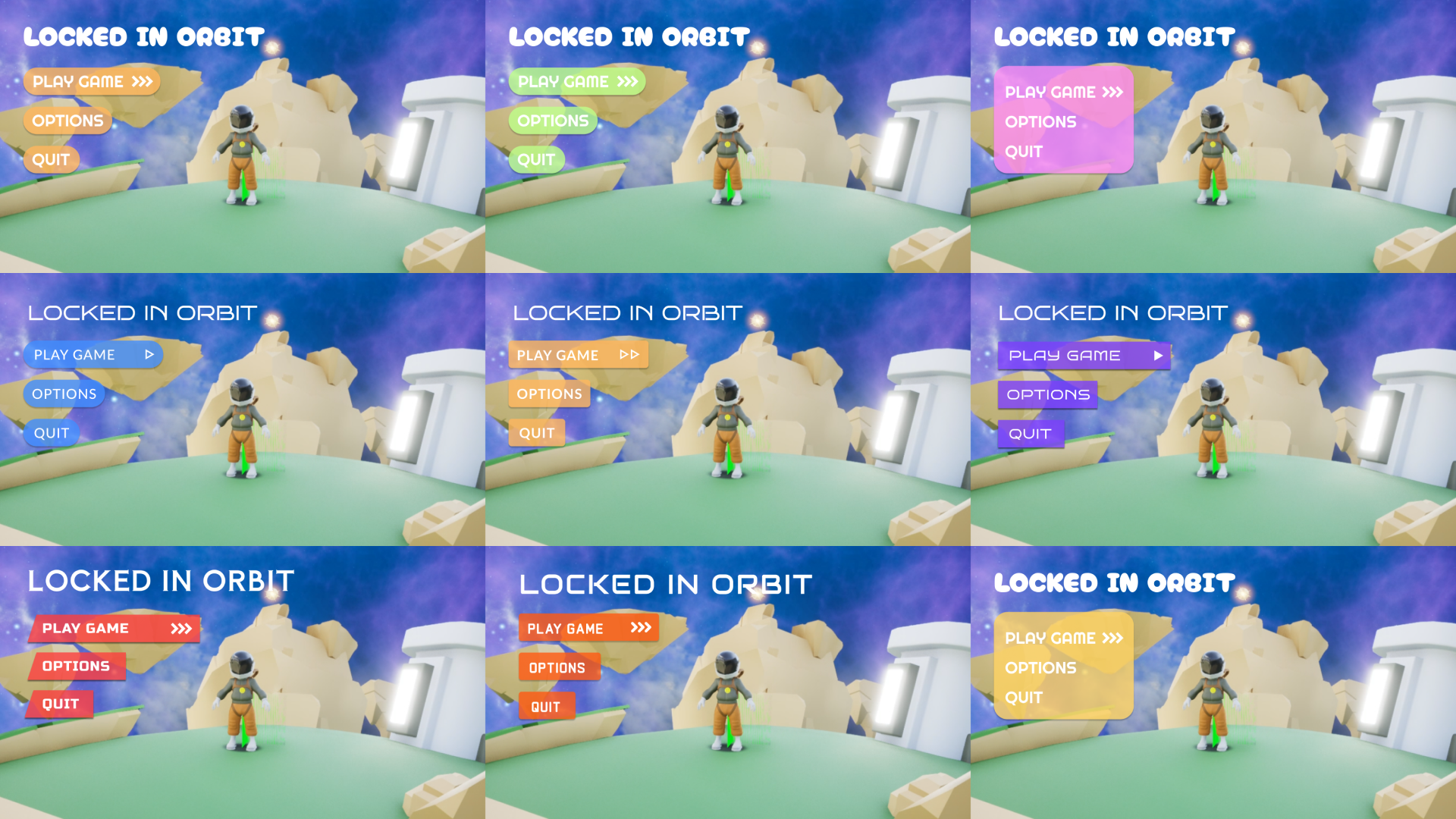
I began my process by creating mockups that matched the style and feel of the game, testing out different layouts, colors and fonts. After establishing a design foundation I built a library of assets that would be easy to implement and update alongside custom pieces for more specific needs.

Menus

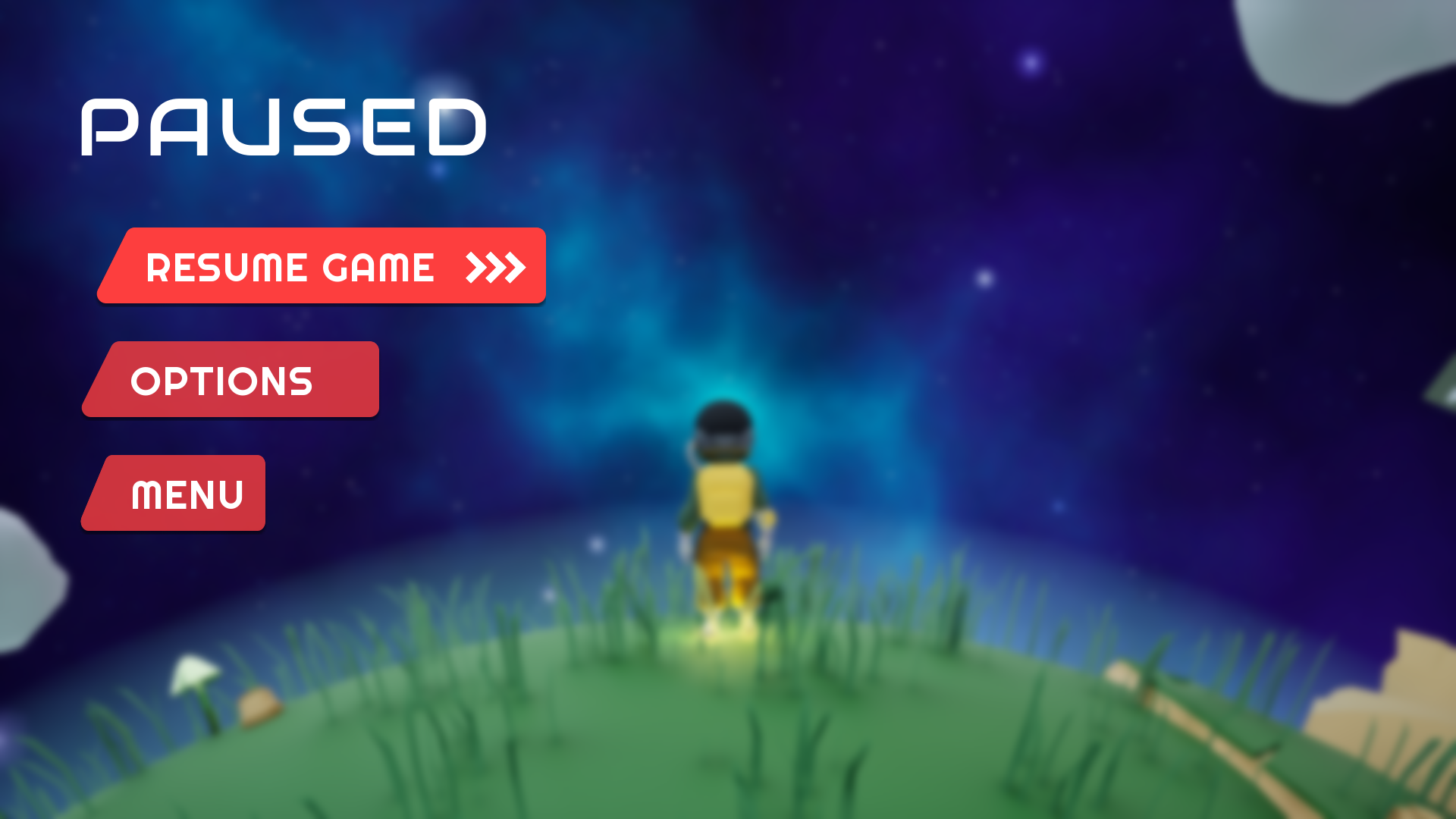
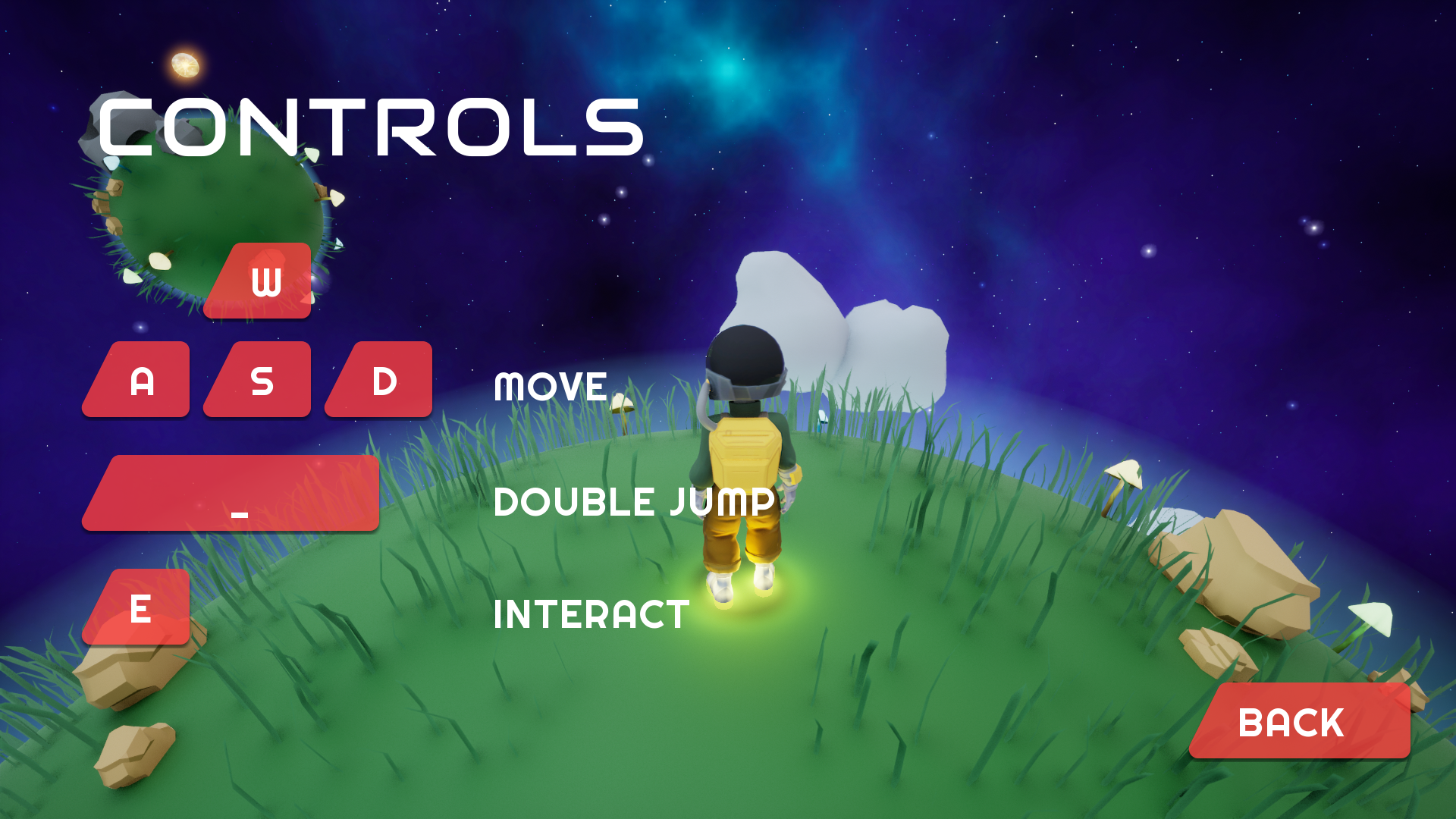
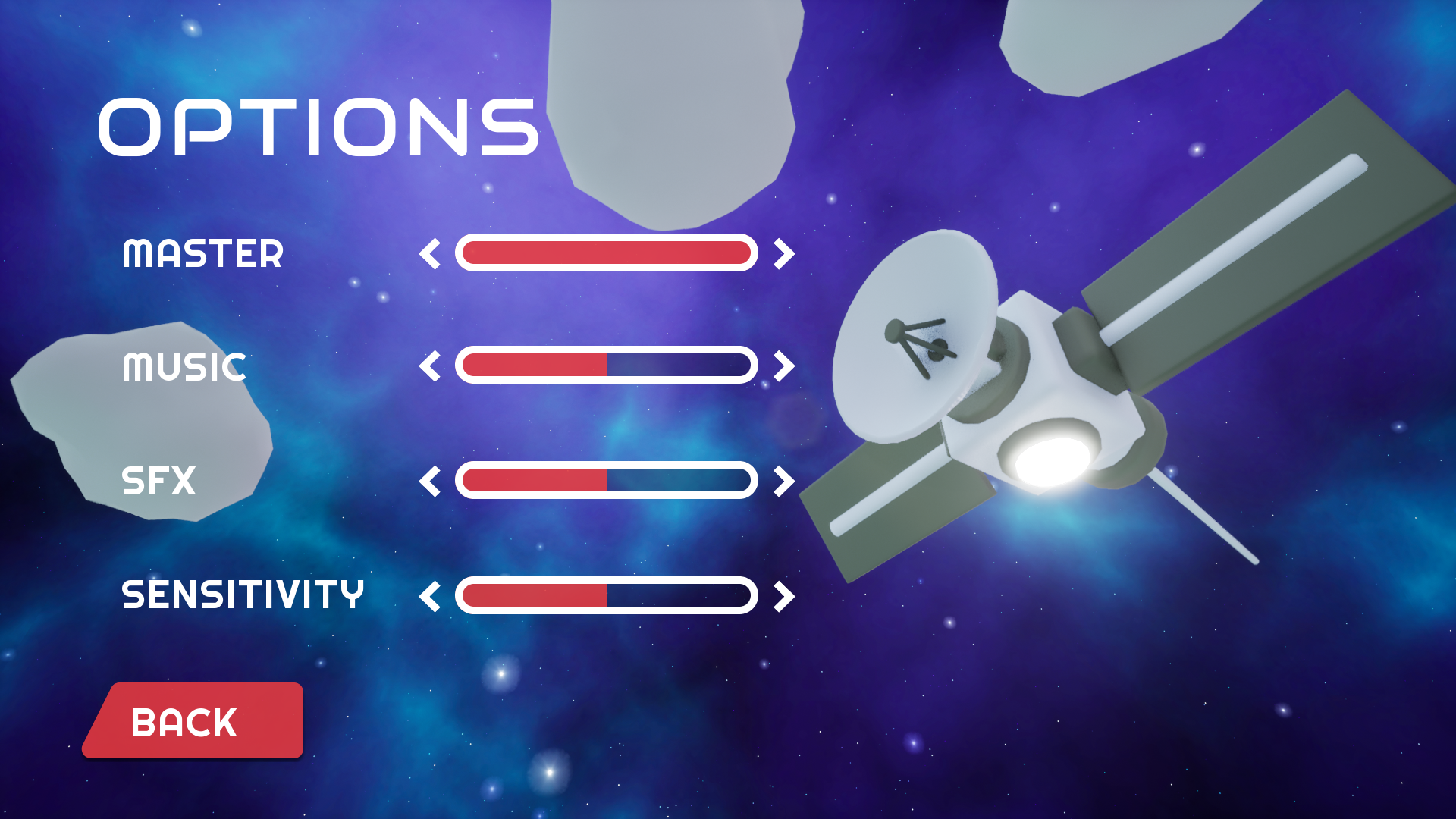
The menus were kept a simple style with subtle animations. The layout of the menus were kept consistent with slight changes for different content such as buttons, sliders or containers.

In-game

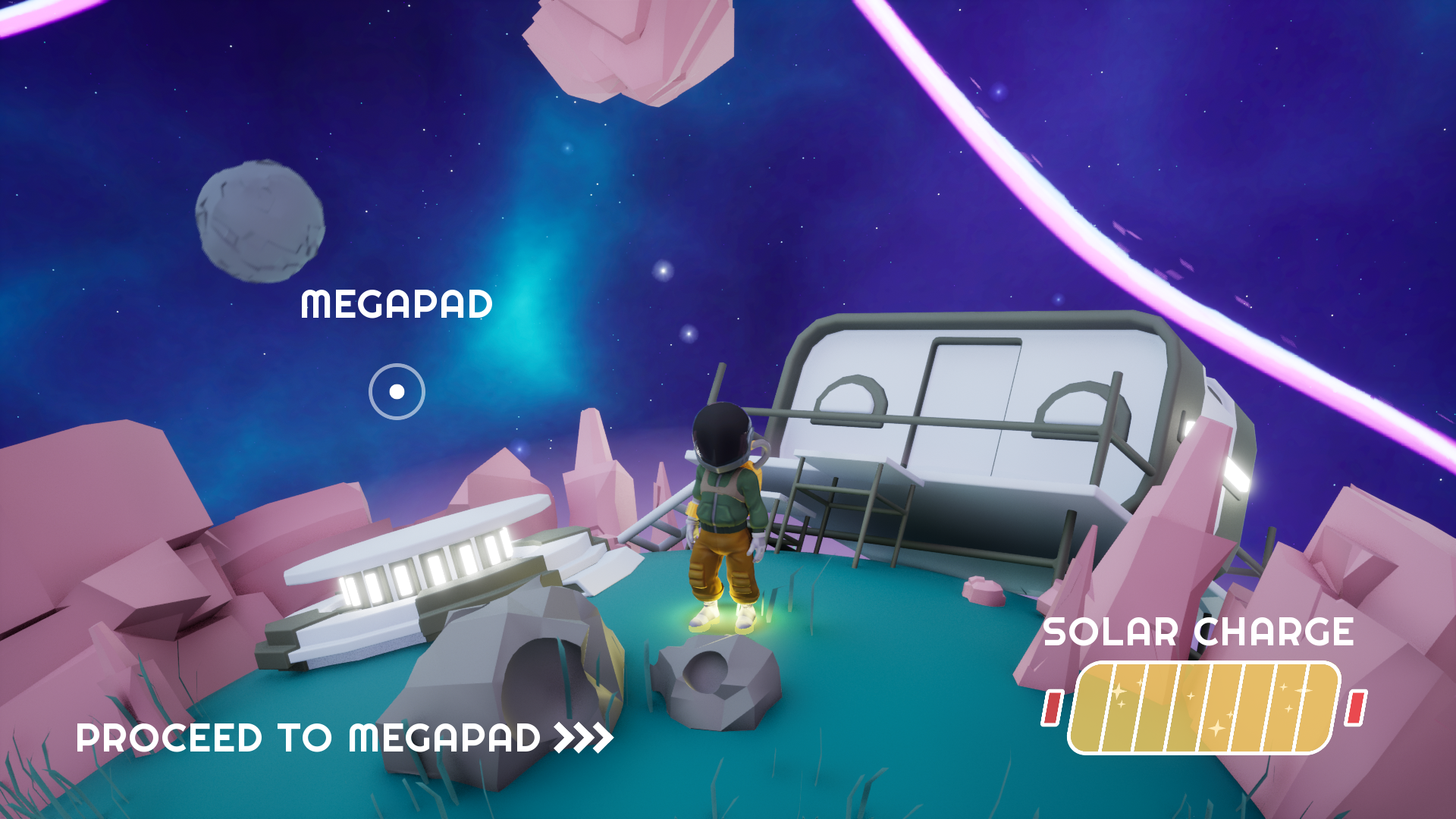
For the in game UI I wanted to keep it simple but still convey the objective. The battery is visible at all times to hint at what the player should do and to track the amount of solar charges. Once the battery is full the mega jump pad is activated, showing an objective prompt and location marker. The mega jump pad has a countdown for a more impactful takeoff.

Colors

For a minimal design I used a white color for text and black for backgrounds and worked with with opacity, blurs and shadows. A soft yellow was used for solar related assets which ties back to the characters backpack, shoes and trail. Red was used as the main color in menus and for accents.

#FD3E3E

Rebel Red

#FFD363

Solar Yellow

Fonts

For the text I wanted something that would fit the space theme while still feeling playful and clean. I paired two different fonts, one for main headings and one for any other style of text. They share similar traits but are still different enough from one another to provide contrast.

AUDIOWIDE

RIGHTEOUS